Your cells are cluttered. Right now, inside virtually every cell in your body, there are worn-out organelles, misfolded proteins, and molecular debris accumulating over time. Left unchecked, this cellular junk is associated with faster aging, neurodegenerative disease, and metabolic dysfunction. The good news: your body has a built-in solution, and research increasingly suggests that fasting is one of the most reliable ways to activate it. That solution is autophagy, a word derived from the Greek for "self-eating," and it may be one of the most important biological processes you've never heard of.
What Is Autophagy? The Body's Cellular Housekeeping System
Autophagy is a lysosomal degradation process, a precise, conserved mechanism present in virtually all eukaryotic cells. Its core function is housekeeping: identifying damaged organelles, aggregated proteins, and invading pathogens, then breaking them down and recycling their molecular components for energy and cellular repair.
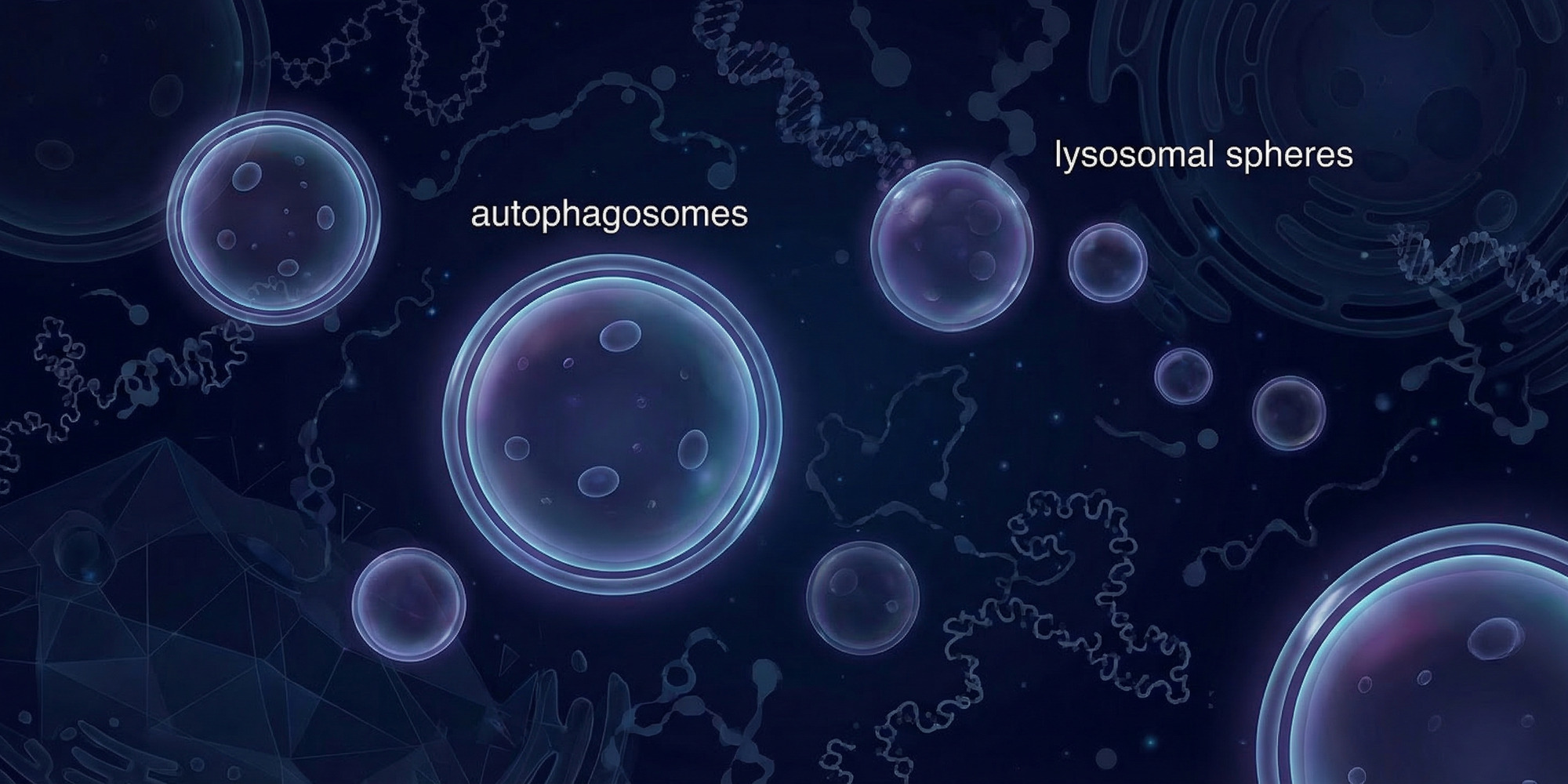
There are three main types of autophagy in mammals. Macroautophagy is the primary and most studied form, in which cells form double-membrane structures called autophagosomes that engulf cellular debris and fuse with lysosomes for enzymatic degradation. Microautophagy involves the lysosome directly engulfing cytosolic material. Chaperone-mediated autophagy uses chaperone protein complexes to selectively transport target proteins into the lysosome via the LAMP-2A receptor.
This process is not simply a clean-up crew: it is integral to cell survival, differentiation, immune defense, and the prevention of genomic instability. When autophagy is impaired, the consequences are significant: research has linked deficient autophagic activity to accelerated aging, neurodegenerative conditions like Alzheimer's and Parkinson's disease, metabolic disorders, and increased cancer susceptibility. The flip side, excessive autophagy, can trigger a form of programmed cell death, particularly under conditions of prolonged starvation. Understanding this balance is at the heart of current fasting research.
How Fasting Activates Autophagy: The Molecular Mechanisms
The connection between fasting and autophagy is rooted in cellular energy sensing. When you eat, particularly carbohydrates and protein, nutrient signals flow through two master regulatory pathways: mTOR (mechanistic target of rapamycin) and AMPK (AMP-activated protein kinase). These act as molecular switches that determine whether the cell is in growth mode or survival mode.
In the fed state, mTOR, specifically the mTORC1 complex, is highly active. It promotes protein synthesis, cell growth, and proliferation. Critically, active mTOR suppresses autophagy by phosphorylating and inhibiting key autophagy-initiating proteins in the ULK1 complex. The cell, well-nourished and receiving strong growth signals, has little need to cannibalize its own components.
During fasting, circulating glucose and amino acid levels fall. mTOR activity declines sharply. Simultaneously, as cellular ATP levels drop and the AMP-to-ATP ratio rises, AMPK becomes activated: it senses energy deficit and responds by activating autophagy-initiating proteins. The result is a coordinated upregulation of autophagic flux: autophagosomes form, sweep up damaged cellular cargo, and deliver it to lysosomes for recycling.
A comprehensive 2018 review in Ageing Research Reviews examined dozens of fasting and calorie restriction studies and concluded that "both fasting and calorie restriction have a role in the upregulation of autophagy, the evidence overwhelmingly suggesting that autophagy is induced in a wide variety of tissues and organs in response to food deprivation." The review noted that fasting and calorie restriction are, in fact, among the most potent non-genetic autophagy activators identified, with fewer adverse effects than pharmacological alternatives like rapamycin.
The molecular picture involves more than just mTOR and AMPK. Fasting-induced reductions in insulin and insulin-like growth factor 1 (IGF-1) further remove inhibitory signals from autophagy machinery. The transcription factor TFEB, which governs the expression of autophagy and lysosome genes, also becomes active during fasting, providing a longer-term transcriptional boost to the entire autophagic program.
Human Evidence: What Clinical Research Actually Shows
Most early autophagy research was conducted in yeast, worms, rodents, and isolated cell cultures, contexts where measuring autophagy is experimentally tractable. Translating this to humans is harder. Autophagy is difficult to measure in living humans because autophagosomes are transient structures; their detection requires specific biomarkers and carefully timed tissue samples.
For years, the assumption that fasting induces autophagy in humans rested largely on strong mechanistic logic and animal data. That began to change with more targeted human studies.
The most direct human evidence came in a 2025 randomized controlled trial published in the Journal of Physiology. Researchers measured autophagic flux, specifically the flux of the LC3B-II protein in peripheral blood mononuclear cells, in 121 adults with obesity randomized to standard care, calorie restriction, or intermittent time-restricted eating (iTRE) for six months. The iTRE group showed a statistically significant increase in autophagic flux compared to the standard care group at the six-month mark (P = 0.04). The calorie restriction group did not show a significant difference, suggesting that the intermittent nature of nutrient restriction, cycling between fed and fasted states, may be particularly effective at driving autophagy in humans. The researchers noted an inverse relationship between autophagy changes and blood triglyceride levels, hinting at metabolic benefits connected to autophagic activity.
This is a landmark finding: the first well-controlled demonstration that intermittent nutrient restriction can increase a primary hallmark of biological aging in humans. The authors described it as providing a plausible mechanism by which fasting could delay the onset of age-related disease. That said, the study is exploratory, the sample was specific to individuals with obesity, and larger replication trials are needed before broad conclusions can be drawn.
Earlier human studies provided suggestive, if less direct, evidence. Studies measuring surrogate autophagy markers in muscle biopsies after short-term fasting, and observations of elevated autophagic proteins in clinical fasting populations, point consistently in the same direction, but the precise duration, frequency, and intensity of fasting needed to optimize autophagy induction in healthy humans remains an open and active research question.
Autophagy, Longevity, and Disease: What It Means for Your Health
Why does this matter beyond cellular biology? Because autophagy sits at the intersection of several of the most significant chronic disease processes humans face.
Neurodegeneration: Autophagy is a primary mechanism for clearing the protein aggregates, including amyloid-beta and tau in Alzheimer's and alpha-synuclein in Parkinson's, that are hallmarks of neurodegenerative disease. When autophagic capacity declines with age, these aggregates accumulate. Animal models consistently show that restoring autophagic activity slows neurodegenerative pathology, though direct human therapeutic applications remain in early-stage investigation.
Metabolic health: Autophagy regulates the health of mitochondria through a specialized subprocess called mitophagy: the selective degradation of dysfunctional mitochondria. Healthy mitochondrial turnover is associated with better insulin sensitivity, improved cellular energy efficiency, and reduced oxidative stress. The 2023 review in Advances in Nutrition on autophagic responses to caloric restriction highlighted that adaptive autophagy induction supports cellular homeostasis and may underlie some of the metabolic benefits observed in fasting research.
Longevity: The Nobel Prize in Physiology or Medicine was awarded in 2016 to Yoshinori Ohsumi specifically for his work elucidating the mechanisms of autophagy, a signal of how central the scientific community considers this process to be. Studies in model organisms from yeast to mice consistently show that upregulating autophagy extends lifespan, and that the anti-aging effects of calorie restriction are substantially diminished when autophagy is blocked. Whether the same principle applies in humans is not yet proven, but the mechanistic parallels are striking.
Cancer: The relationship between autophagy and cancer is complex and context-dependent. In healthy cells, autophagy suppresses tumor formation by clearing pre-cancerous damaged cells and reducing genomic instability. In established tumors, however, cancer cells can sometimes co-opt autophagy to survive stress conditions like chemotherapy. This duality means that fasting-induced autophagy in the context of cancer treatment is an active area of clinical research, and not something to approach without oncological guidance.
The practical takeaway is that fasting, whether through intermittent fasting schedules, time-restricted eating, or periodic extended fasts, appears to be a viable, non-pharmacological strategy for activating the body's own cellular renewal machinery. But context matters. Short-term, cyclical fasting seems well-suited to promoting adaptive autophagy. Prolonged, extreme fasting can push beyond the adaptive response into harmful territory. And for individuals with existing health conditions, particularly cancer, diabetes, or eating disorder history, fasting strategies should always be pursued in consultation with a qualified healthcare provider.
The science of fasting and autophagy is still maturing. What is clear is that the ancient practice of periodic abstinence from food does something measurable and meaningful at the molecular level, and that understanding precisely what that is may hold genuine implications for human health and longevity.
Sources
- Bagherniya M et al. "The effect of fasting or calorie restriction on autophagy induction: A review of the literature." Ageing Research Reviews, 2018. DOI: 10.1016/j.arr.2018.08.004
- Shabkhizan R et al. "The Beneficial and Adverse Effects of Autophagic Response to Caloric Restriction and Fasting." Advances in Nutrition, 2023. DOI: 10.1016/j.advnut.2023.07.006 (PMC10509423)
- Bensalem J et al. "Intermittent time-restricted eating may increase autophagic flux in humans: an exploratory analysis." Journal of Physiology, 2025. DOI: 10.1113/JP287938